
Welcome to the FeatherSnap Media Centre
Watch your feathered friends visit your garden all year round – wherever you are!
FeatherSnap • 03/12/2025
Seasonal and migratory behaviour of garden birds by FeatherSnap’sOrnithologist, Maria Kincaid
As well as dreaming of a white Christmas, few sights feel more festive than a robin redbreast in a frosty garden. Winter is a wonderful season for birdwatching, but garden visitors change throughout the year, making bird behaviour a captivating spectacle in every season.
FeatherSnap, the solar-powered smart birdfeeder with built-in webcam and AI bird ID, lets you enjoy the action up close - capturing photos and videos of your feathered guests anytime, anywhere. Now, FeatherSnap’s in-house ornithologist (and proud “bird nerd”) Maria Kincaid shares her expert insights: what to spot each season, how urban and rural birdlife differ, and her pick for ‘bird of the month’.
How do bird habits and behaviours change across the seasons in the UK?
Bird behaviour varies greatly throughout the year. During the winter, you’ll have resident birdsaround, and if it’s especially cold they may visit your feeders more frequently.
As it moves into spring, we’ll have the beginnings of the migration - birds will start returning to the region for breeding, or leaving to move to their breeding habitats, and you’ll have much more song - many species sing only during the breeding season, to establish and defend territory, and attract mates.
During the summer, when native food sources are most available, we get to nesting. The morning song will often quiet down some, but not entirely. Birds may be more defensive of their nesting areas, and you may see more “bird fights,” birds defending territories and nests, and driving off competitors or potential predators.
Then, during the autumn we see birds returning to their overwintering areas - some will return to the UK where they overwinter after breeding in the arctic, and some will be leaving for warmer climates further south.
What migratory birds visit the UK, and how far have they travelled to get here?
There are many migratory birds in the UK, traveling variable distances. Cuckoos overwinter in Central Africa. Swifts and Swallows make an incredible journey of around 6000 miles to sub-Saharan Africa.
Brambling and Fieldfare winter in the UK, breeding in northern Europe and Asia.
Eurasian Blackcaps breed in the northern UK and Europe into parts of Asia, and overwinter in Africa, but can be found year-round in the southern UK and parts of Europe.
European Turtle-Doves are strongly migratory, breeding in Europe and Asia (including the UK!) and wintering in sub-Saharan Africa.
This is just a small subsection of migratory birds in the UK, there are many more, and it’s not always a straightforward migration - in many species, some populations are migratory, others are not, and some species will show elevational migration, or will wander or irrupt when food sources are scarce.
Are there climate-related changes you’re observing in migration patterns or seasonal visitors?
There are changes in migration patterns and seasonal movements due to climate across the world. Timing of migration is changing as well as the routes the birds are taking and their final destinations. Some birds are staying longer or staying year-round because there is food available.
We’re also seeing some species having difficulty adapting to the change in climate, as the timing of food source availability is changing. The available range of many species is also changing, with them being found further and further north as time progresses.
What are the top five most commonly spotted birds in England, Scotland and Wales – and are there regional differences?
The most common birds spotted are the House Sparrow, Blue Tit, Great Tit, Starling, and Wood Pigeon. There are always regional differences, but these top five are the same across England, Scotland, and Wales.
Which birds should people look out for each month – could you name a ‘bird of the month’?
• January - Song Thrush
• February - Siskin
• March - Blackcap
• April - Blue Tit
• May- Swallows or Wrens
• June - Great Tits
• July - Blackbirds
• August - European Robin
• September - Chiffchaff
• October- Redwings
• November - Fieldfare
• December – Goldfinch
Which rare or unusual birds might people realistically hope to see in their gardens in the UK?
There are a few rare or unusual birds that we could realistically hope to see in their gardens in the UK, and it is variable by the region and habitat type they live in. Redpolls, Brambling, Crested Tits, are all potential visitors. There are also feral populations of Rose-ringed Parakeets in some of the larger cities!
How do urban bird populations differ from rural ones?
There can be many of the same birds in urban and rural areas. Species like House Sparrows and Rock Pigeons have evolved to be in areas where there are humans, and Starlings thrive in both urban and rural areas. However, rural areas often, but not always, have just a little bit more diversity in the birds
that are seen in gardens. Rural areas are often closer to wooded or grassland habitats, which some species of birds depend on, and can be more difficult to find in densely populated areas.
How can people tell apart similar garden birds?
Similar looking species can be quite difficult to tell apart. I always look at size, colour, behaviour, and bill/foot shape, as well as looking for a few striking plumage features. In the FeatherSnap app, we have a Bird ID option, which asks questions like the general size of the bird, the colours on the bird, and the location. Once you’ve got that information, it gives you a list of birds with those identifiers and then lists the three main identifying features of a particular species. One of the best things about the Bird Book in the FeatherSnap app is that it offers multiple images for comparison, these identifying feature tips, and range and migration information, which allow you to make these IDs.
Everything you need to begin your birding adventure:
• The FeatherSnap Scout – RRP £159.99
• FeatherSnap Wi-Fi Subscription – RRP £5.99/month or £49.99 annually
Simply download the user-friendly FeatherSnap App and you’re ready to go! Visit
www.uk.feathersnapcam.com to start your journey into the wonderful world of birds with
FeatherSnap.
ENDS
Words: 1,004
Find out more
For further information, contact: sally@hornbygeorgepr.com.
Tel: 07792 115 759.
About FeatherSnap:
AI and ‘Bird Nerd’ Powered:
Referred to as the resident “bird nerd”, FeatherSnap’s certified Ornithologist helped accurately train its
identification model to provide the most advanced bird recognition. Its AI model is programmed to recognise a
wide array of bird species with remarkable accuracy, whilst the feeder takes the hassle out of identification,
offering real-time insights into the avian visitors frequenting your garden.
FeatherSnap smart bird feeder cams now carry the STEM.org Authenticated™ trustmark in recognition of their
design, effectiveness, and educational value. They were also ranked among the top 5% of all STEM products for
2024-2025.
The certification honours what’s at the core of FeatherSnap’s mission–inspiring learning, curiosity, and
connection to nature through technology.
Maria Kincaid
Maria serves as the in-house Ornithology Research Specialist for FeatherSnap - though she proudly refers to
herself as the team's “bird nerd”. Originally from New Orleans, she studied Natural Resource Ecology and
Management at Louisiana State University. After living across the country, she’s now based in North Dakota,
where she spends her time watching the sky for birds or scouting out the next great hunting spot. When she’s
not in the field, she can be found with her husband and dogs, out in the garden, or in the kitchen baking.
News release
October 2025
For immediate release
related_images
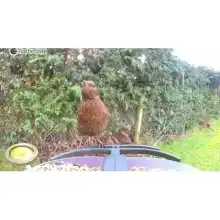
FeatherSnap smart bird feeder with HD camera
- 07/08/2025
- 1194 x 671 px
- 269.4KB